Feb 19, 2026
How to Call for Help in an Emergency at Sea
Richard Beniston


Essential Distress Signals, Mayday Procedures, and Rescue Methods
Emergencies at sea can arise without warning, whether due to adverse weather, equipment failure, medical crises, or collisions. Being prepared and knowing how to signal for help can make the difference between a resolved crisis and a tragedy. This guide provides essential steps and tips to ensure your safety and receive timely assistance during maritime emergencies.
About the Author
Richard Beniston is an RYA Yachtmaster™ Examiner for Sail and Power, and one of only 22 RYA Yachtmaster™ Instructor Trainers worldwide. With 23 years' experience and three RORC Fastnet campaigns as skipper, he provides student support from Hamble Point Marina for Sailing Course Online and Urban Truant.
Learn more about our instructors
Preparation Before Setting Sail
Before embarking on any journey at sea, preparation is your first line of defence against emergencies.
Equip Your Vessel
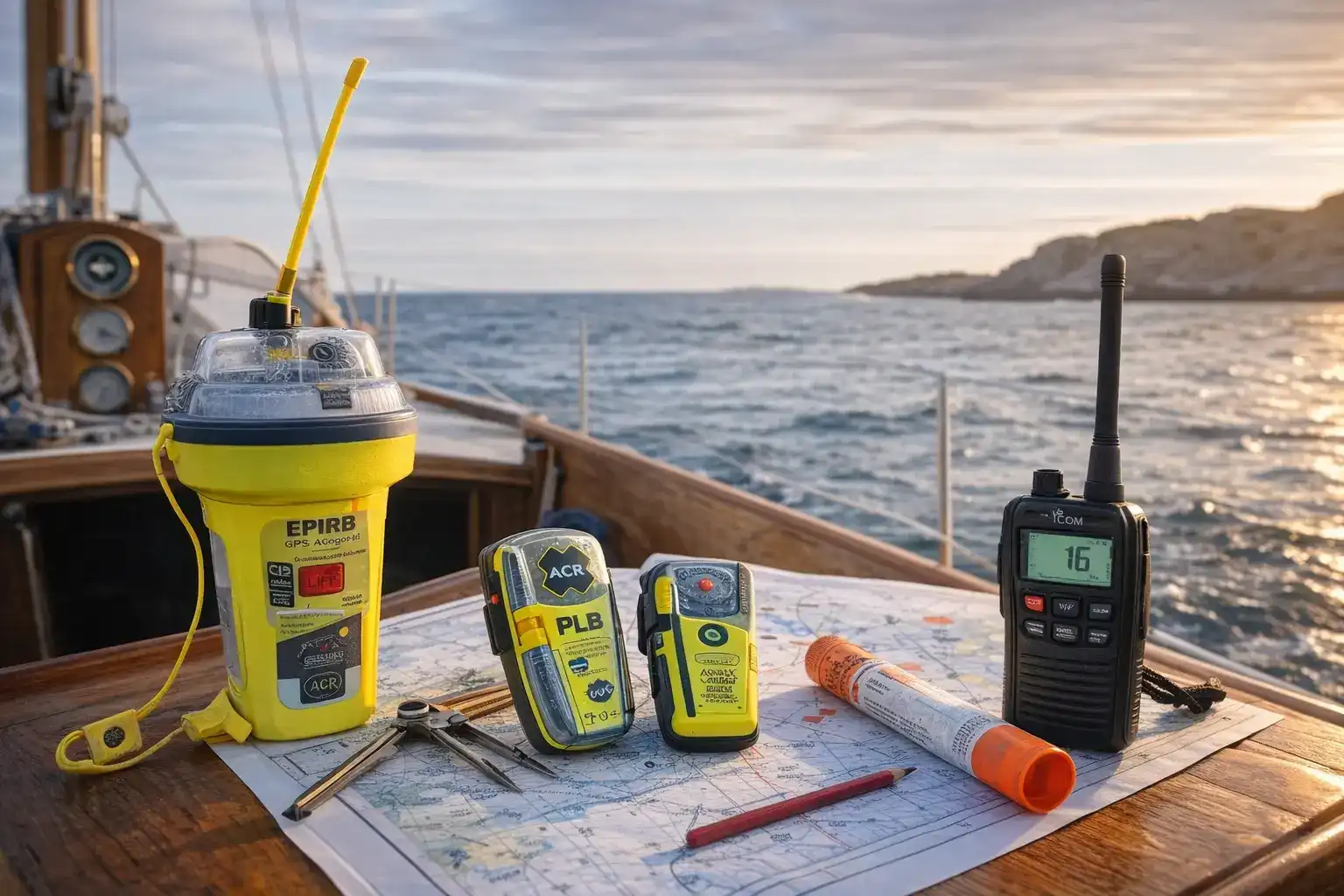
Ensure your boat is equipped with the following essential safety items:
- Life jackets for all passengers
- Fire extinguishers
- First aid kit
- Flares and distress signals
- VHF marine radio
- EPIRB (Emergency Position Indicating Radio Beacon)
- Navigation lights
- Radar reflector
- Liferaft
File a Passage Plan
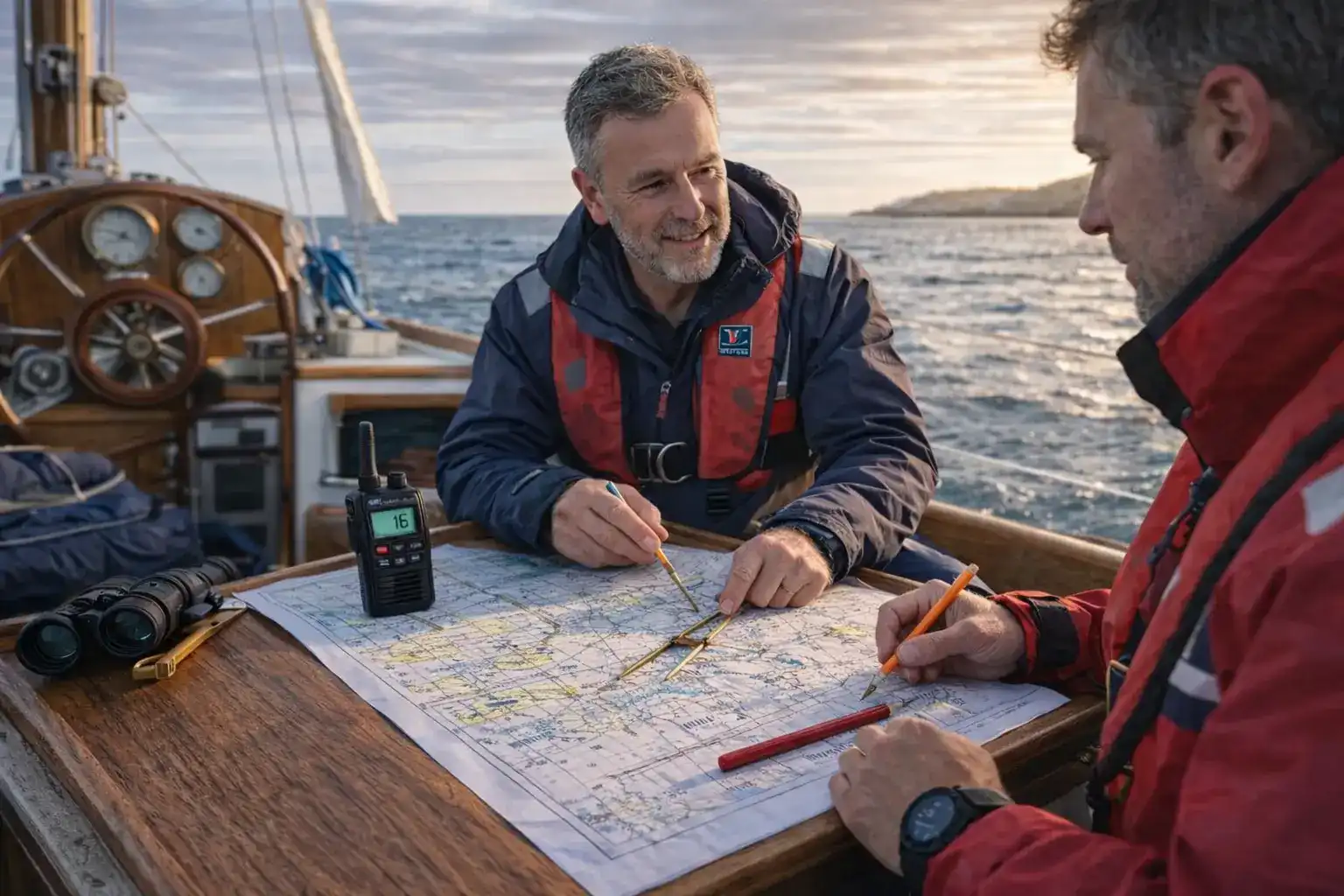
Inform a trusted contact about your intended route and estimated return time. This plan should include:
- Your departure point and destination
- Estimated time of arrival or return
- Details about your vessel (make, model, and colour)
- Number of people on board
This information will help authorities locate you more efficiently in case of an emergency. For comprehensive guidance on creating an effective plan, see our guide on what is passage planning.
Check Weather Conditions
Always verify weather forecasts before heading out to sea. Avoid sailing in severe weather conditions and remain updated about changes during your journey. Modern weather apps for sailors make it easy to monitor conditions in real-time.
Steps to Take During an Emergency at Sea
If an emergency occurs, immediate and calm action is crucial to ensure safety and rescue.
1. Assess the Situation
Evaluate the nature of the emergency. Is there a fire? Is the vessel taking on water? Is someone injured? Identifying the problem accurately will guide your next steps.
2. Signal for Help
Use the appropriate signalling methods to alert nearby vessels or rescue services:
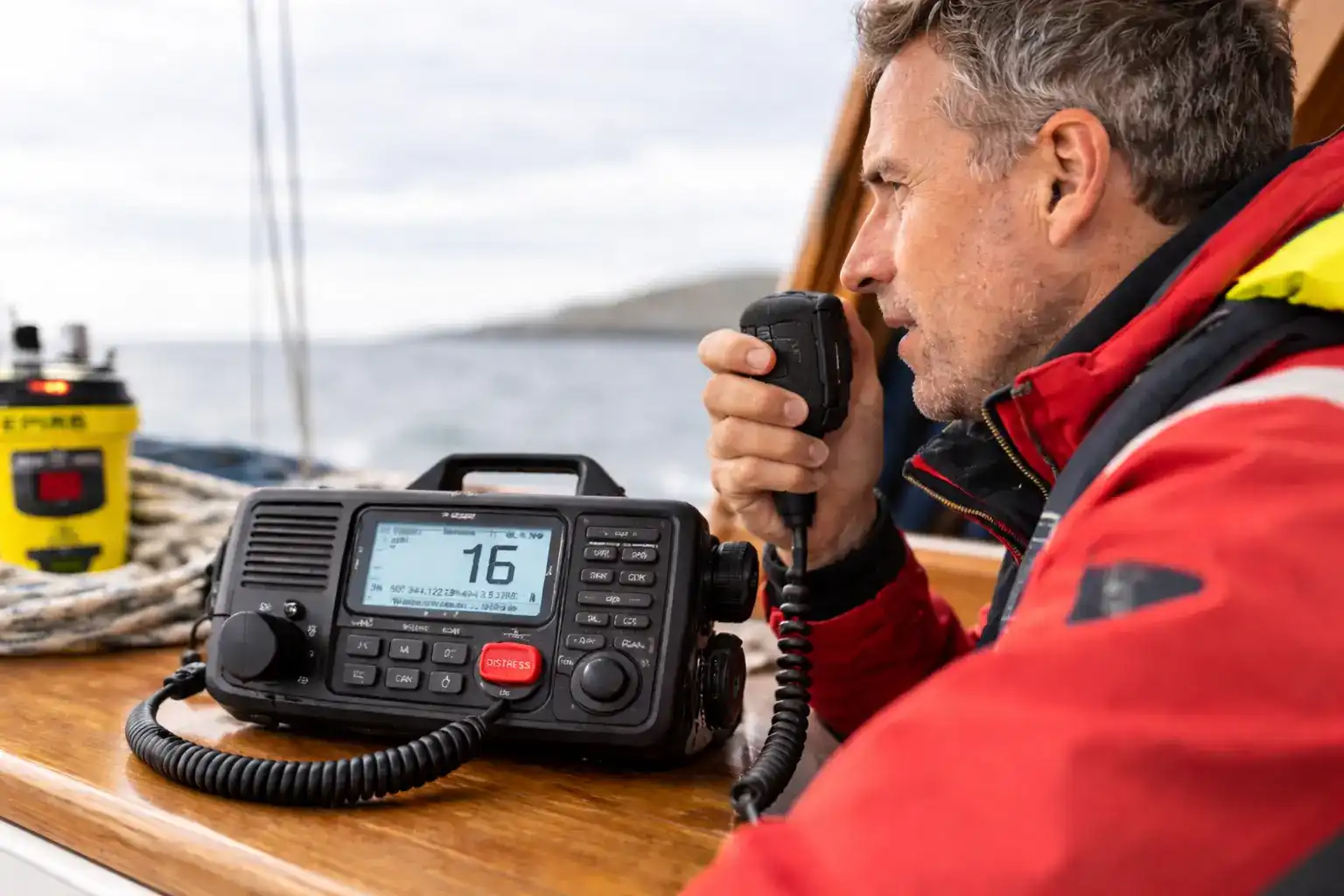
VHF/DSC Marine Radio: Send a DSC distress call if your radio has this feature. Most modern sets have a large red button labelled DISTRESS which you press and hold for 5 seconds.
Then use Channel 16, the international distress frequency, to issue a Mayday call. The Mayday call is derived from the French "venez m'aider" meaning "come to my aid." It is reserved for situations where a vessel or person is in grave or imminent danger and requires immediate assistance.
How to Make a Mayday Call
A Mayday call should follow this format:
- "Mayday, Mayday, Mayday"
- "This is [vessel name], [vessel name], [vessel name]"
- Callsign and MMSI
- "Mayday [vessel name]"
- Callsign and MMSI
- "My position is [latitude/longitude or bearing and distance from known point]"
- "I am [nature of distress: sinking, on fire, etc.]"
- "I require immediate assistance"
- "I have [number] persons on board"
- "[Any other useful information: injuries, taking to liferaft, flares fired]"
- "Over"
After transmitting, release the button and listen for a response. If there is no response after 10–15 seconds, repeat the broadcast.
EPIRB: Activate your Emergency Position Indicating Radio Beacon. This device transmits your location to search and rescue services via satellite and has an unlimited range, making it essential for offshore passages.
Visual Signals: Use flares, a signal mirror, or a flashlight to draw attention, especially at night. For more on the evolving technology in distress signalling, read our article on the future of flares on boats.
Sound Signals: Repeatedly sound your horn or bell to indicate distress.
Mobile Phone: You can dial 999 or 112 and ask for the Coastguard. However, mobile phones should not be relied upon as the primary means of calling for help, as signal coverage at sea is limited and they cannot alert other vessels.
3. Maintain Safety
Take steps to ensure the safety of everyone on board. Distribute life jackets and ensure they are securely fastened. Understanding when to wear a lifejacket is a fundamental part of seamanship. If there is a fire, use a fire extinguisher and move passengers away from the affected area. In the event of flooding, use bilge pumps or buckets to remove water. Stay with the vessel as long as it remains afloat; it is easier for rescuers to locate a vessel than individual swimmers. Only get into a liferaft as a last resort – the guidance is to "step up into a liferaft," meaning you should only abandon ship when the vessel is actually sinking.
It is important that crew know how to launch the liferaft and we will cover this in a future blog.
4. Provide First Aid
If someone is injured, administer first aid while waiting for rescue. Address severe bleeding, perform CPR if necessary, and keep the person warm and stable.
Methods of Rescue
Once your distress signals are received, several rescue methods may be deployed:
HM Coastguard: In the UK, HM Coastguard coordinates all maritime search and rescue. They may task RNLI lifeboats, helicopters, or coastguard rescue teams depending on the situation. For authoritative guidance on calling for help at sea, see the RNLI safety advice.
Nearby Vessels: Fellow sailors in the vicinity may respond to your distress call and provide assistance. It is a legal requirement for other vessels to help if they are able and in close proximity.
Search and Rescue Teams: Dedicated rescue organisations including the RNLI and volunteer groups are often involved in maritime emergencies.
Preventing Future Emergencies
Post-incident, take the following precautions to improve future safety:
- Conduct a thorough inspection and maintenance of your vessel.
- Replace used or expired safety equipment, such as flares or fire extinguishers.
- Review and update your emergency procedures with the crew.
- Consider taking a safety course to enhance your maritime knowledge – emergency procedures are covered in detail in our RYA Day Skipper theory course.
Conclusion
While emergencies at sea can be daunting, having the right knowledge, equipment, and preparation can significantly improve outcomes. Always prioritise safety, remain calm, and follow established protocols to ensure help arrives quickly and effectively. Remember, the key to surviving an emergency at sea is preparation, communication, and the ability to adapt to unforeseen challenges.
Interested in learning more? VHF radio procedures and distress calls are covered in our RYA VHF Marine Radio course.